Latest »
With the help many dog training programs on the TV, training and understanding of your dog has now become easier to undrstand, though it is advised you seek the advice of a professional behaviourist when dealing with any problems you may have with your dog. The reason for this is not that they wish to get money from you, it's because when you train your dog..... Timing is everything.
You can so easily train your dog to do the things that you dont want them to do, by just being compasionate to them at the wrong time.
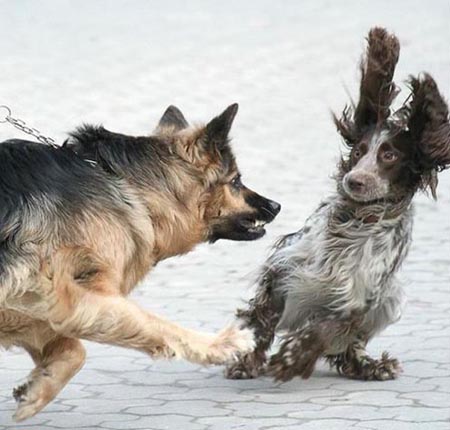
Dogs seem to be very aware of their owners' emotions and what is going on around them, so it's no wonder that dogs get anxious in the middle of a house move. Unfortunately, this can often make the owner more anxious too. Here are some tips and hints to help the move go smoother
MORE....
|
Welcome »
Dog Psychology
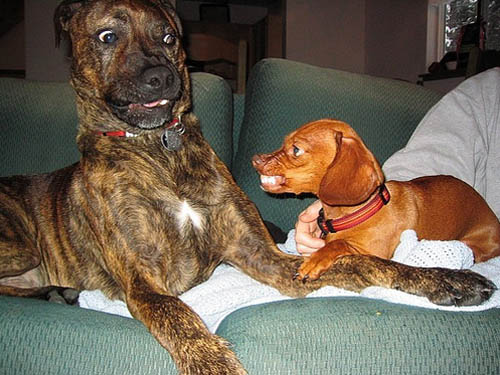
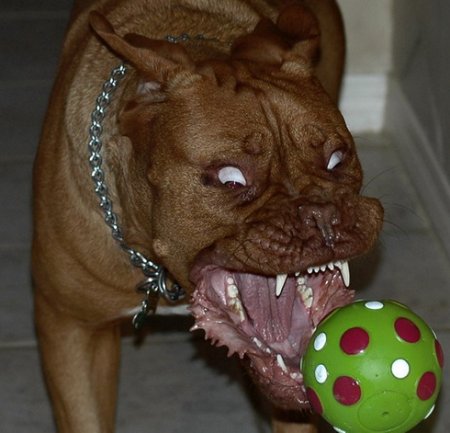
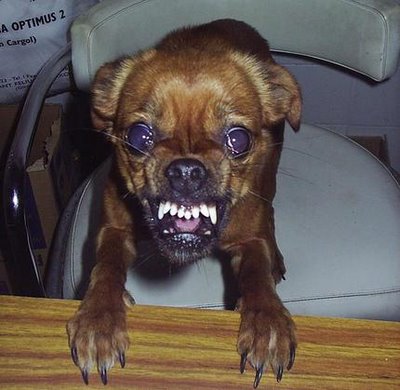
I must admit to being unable to pass a dog without wanting to pet it and I have been bitten on many occasions by various breeds of dog. So with that in mind I would like to take this opportunity to warn others from doing the same, although it has still not deterred me from wanting to and indeed going to pet any and every dog I see.
In the 25 years that I have taken a healthy interest in how dogs think and act, I have noted that every time I had been bitten and on every occasion I have worked with aggressive dogs, that the aggression has been fuelled by fear. Once the reason for the fear was found, I was able to eliminate the fear issue, which would combat the aggression issue and on a lot of cases, it was as if I had turned off the aggression like a light switch. Although some issues that are unable to be eliminated like traffic, people or other animals, had to be dealt with by building trust and in turn confidence.
If your dog has aggression issues with objects like toys, food, doors, your post.... These are usually dominant driven issues, but are not the cause of the fear. So by simply claiming the item, stopping your dog from touching it (without touching your dog or collar), by blocking your dogs route to it (though not advised if you have a big dog or if you are fearful of it, without a professional being present) and making your dog sit until it sighs or lays down of its own accord, then just wait for a sigh or your dog putting its head on the ground. This will signify that your dog has given up, so you then walk walk away slowly. Do not touch the item as this may start the aggression issue again, just walk away slowly. If the item needs to be moved, then wait till your dog leaves the room of its own accord for the first few times.
But please be sure to seek professional help when dealing with aggressive dogs, because where you may see aggression, a professional may see play or where you may think your dog is calm, a professional would see danger.
Below is an article I wrote for a local paper trying to give more understanding about dogs behaviour after they had printed the story of a local girl being bitten on the face by a Collie. Now these stories are becoming more and more frequent in our news and has given some dogs a bad name, like the Staffordshire Bull Terrier, English Bull Terrier, Rottweiler, German Shepherd and even the American Bull Dog. These are not dangerous dog breeds, in fact statistically around the world, its the smaller dog that bites the most or the Labrador Retriever, due to the fact they seem to be the most popular. The main dog that has been banned though is The American Pit Bull Terrier, but I fear it is more to do with it's use as a fighting dog and soon it will be the Staffordshire Bull Terriers, Rottweiler and Shepherds that are already banned in other countries and American states.
It really makes me very angry and sad that in this world we would be willing to wipe out breeds of dog and call them dangerous, instead of admitting that we as humans maybe doing wrong by these poor dogs. If we could all take the time to understand dogs and we could even teach it in schools, to help future generation understand that dogs are not a danger to humans. Humans are a danger to dogs, which is why they bite us, through fear.
Dominance Submission Assertiveness
and Aggression
In Domestic Dogs
By Bill Gibson Dog Psychologist Behaviourist and Trainer
Owner of Connors Legacy Dog Psychology and Training In Colchester
From a very early study of captive wolves (Canis Lupus), it became apparent that wolves were very much like domestic dogs (Canis Lupus Familiaris) in the way they act. In fact through further studies in modern days, it has been established that the domestic dog holds as little as 78% of the wolfs DNA and the first domestic dog was on this earth at least 15000 years ago.
In Various Studies Of Wolves The Findings Are As Follows...
|
There are usually about 6-10 wolves in a pack, and the more food available, the larger the pack. There is a dominance system in which the higher ranking individuals get to eat first (though in non captive wolves, this is usually the eldest members of the pack). Only the Alpha (dominant) male and female will breed in the pack. They breed in January and after 60-65 days, the female gives birth to 5-9 cubs. Other members of the pack contribute to the feeding of the pups after they have been weaned. They guard a large territory from other wolves or predators by leaving sent markings (scratch like marking and urine) and can travel long distances in their search for food.
Wolves are not a predator of man, though they will defend their young if put in a position to do so. Wolves can recognize each other's individual vocalisations (howling) in the same way that we can pick up the telephone and instantly recognise a familiar voice even though we cannot see the person we are talking to. Wolves use howling to assemble the pack before a hunt and howling helps keep pack members in contact over vast stretches of territory. Wolves rarely bark.
Whenever wolves meet they carry out the ritualised greeting behaviours that are so familiar to us with our pedigree dogs, but with wolves you are quickly reminded of their wild side. Every eye and body movement conveys so much information. The lower ranking wolves correctly show deference to the Alpha Female and the Alpha Male. Their subservient demonstrations can appear exaggerated in the extreme compared with domestic dogs but what one is observing is body language in all its clarity. With the lower members exaggerating all the calming signals shown by both wolves and domestic dogs, show that. The dominance between pack members is real. The fear that causes the wolf to do this is a fear of aggression. Few errors are made and pack order is kept, which means the hunting machine is always primed for action.
Dominance In Modern Day
Some would say that dominance does not exist in dogs or otherwise in modern times, where it is clear that it does exist in primates like moneys and human beings, so why not in dogs? I'm sure that you would agree that the opposite to dominant is submissive and we have all seen dogs laying down and rolling over if we go to stroke them or if another dog approaches them too quick. These are calming signs in dogs, using calming signals to calm the approaching dog. What if the word was changed from dominance to bullying. If a human wanted to show dominance over another human, they would do it in such a way that there would be no misunderstandings. Like verbally (sometimes shouting), physically (maybe holding or pushing) and even mentally (through facial expressions and looks, all done in silence), this is now understood as bullying within humans. All these are signs shown by many domestic dogs everyday, which is why it is said you should never look a dog in the eye, because this is challenging to a dog and those that have responsibility for an environment would react to it.
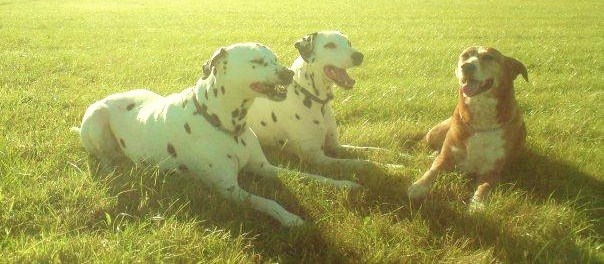
Signs Of Dominance In Domestic Dog's....
There are over 700 different breeds of domestic dog, just over half recognised by kennel clubs around the world. Each breed would come under a characteristic category that describes what should come as instinct to the breed although this is also growing with the help of popular designer breeds. The Labrador and Spaniels for instance are retrieving breeds, the Rottweiler, Collie's and Shepherd's are herding breeds and most Terrier breeds were used for hunting, which is where, it is said that a lot of their feisty nature comes from. Although their biggest instinct is to protect, either themselves, humans or their main food source and this is one of the main causes of behavioural concerns through a nurturing, often unintentional and this can cause many dominance/bullying concerns.
The three categories mentioned above were later recategorised as working dogs and again the black and tan breeds (Rotti, Shepherd and Doberman) were used as guard dogs, utilising their instinctively more fearful nature. They would usually bark at every new unfamiliar sound, smell or sight they come across. All breed's will hold this same basic instinct that would come from their wild ancestors and has been bred into them through the thousands of years of domestication. They will also hold their own language that should be recognised by every member of the species as well as other animal species. These instincts are natural by can cause behavioural concerns if they are nurtured. Some of these instinct are what helps to drive a dog but can be exaggerated with the help of the protective instinct.
There are three main drives;
The food drive. A domestic dog would enjoy its food more if it had to work for it, by maybe asking the dog to sit and stay for a while, giving a paw, maybe even asking the dog to bark (saying please, ideally with a hand signal) or running through everything the dog has been taught through training before allowing it to eat. Many owners would consider this to be cruel but if you consider how hard the dog will have to work in the wild to obtain their food, you will simply be adding value for the food and building respect for you. Behavioural Concerns Include: Resource guarding, snapping at children, barking at the door, reacting to people within the home and many other behavioural concerns listed below.
The sex drive. The instinct to reproduce Behavioural Concerns Include: Even the most well behaved of dog owners will find it hard to ask their dogs to do as they have asked, if it has the sent of a bitch (female dog) in heat. This is one of the reasons for getting a male neutered, the other would be to keep him in good health. There is more chance of a unneutered male being diagnosed with cancer or other health related conditions in his later life than a neutered male and the same applies to the female sadly.
The prey drive. Now this is usually more for the hunting breeds, but all dog would generally chase a toy that has been thrown for it or some will chase cats and wildlife. In fact throwing a ball for a dog can cause this to happen more, but it can also be used to redirect unwanted behaviours through the correct training. Now if the dog is in good health and being regularly fed, then this chase is more out of a trained behaviour than instinct. Behavioural Concerns Include: Dogs that chase people, cars, buses, bikes or lorries would do this generally through fear caused be a responsibility of protecting and depending on the amount of fear would dictate the amount of stress. This then dictates any aggressive behaviour show if the dog was able to catch one of the above. This is where a fight or flight decision would have to be made (bullying or running away) and all dogs should understand the signals that go with these drives....
Some dominant/bullying signals in your dog would be... prolonged staring in the eyes of another dog or human, until one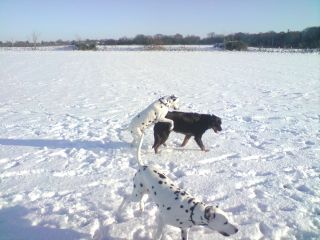 looks away, their head and/or tail high with their chest pushed out to make it and them look bigger. Moving towards another dog at a fast pace or lunging without warning. Trying to hump other dogs, male or female, even if they have been nutered or spade. looks away, their head and/or tail high with their chest pushed out to make it and them look bigger. Moving towards another dog at a fast pace or lunging without warning. Trying to hump other dogs, male or female, even if they have been nutered or spade.
To understand if you have a dominant dog you will need to look for the signs. A dog that barks and growls a lot would not usually be a dominant dog, this dog would normally be a stressed, fearful dog and would need a lot of help from their owner to relieve this stress and fear. It is usually the quiet dog that would be the more assertive dog, one that very rarely reacts, although would show its teeth when put in a situation that it feels it would need to react to or control. If you are out on a walk with your dog and another dog approaches, how would your dog react?
Common signs of dominance/bullying
Head held high with the ears as erect as possible, to expose an expanded chest.
Tail or stump raised high and still (not wagging). A tail that is high and wagging usually indicates excitement.
Holding head over the back or neck of another dog.
Humping a cushion, toy, someone's leg or another dog (same sex or otherwise).
Using a paw on the back of another dog as if it was ready to jump on it's back or to hold it down.
Using its mouth to hold another dog around the neck, whether on the ground or what looks like play or fighting.
Staring in the eyes of another dog or person (although this could also be fear, see below)
-
Growling at people or dogs (although this could also be fear, see below)
-
Snapping at people or dogs without any barking is something a dominant dog will use to it's advantage when make a point that it is in charge or to keep order. This is much the same as the way a child used to be chastised. It is not meant to leave any lasting damage, like a slap on the wrist if you like.
-
Running after people, dogs, cats, birds or wildlife, could be dominance if within your dogs territory. But usually this is instinct from your dogs natural prey drive, although most pet dogs would just walk away if what ever they are chasing suddenly stops.
Common misconceptions of dominance
Barking at the door, other dogs, people, noises or .... well really everything (unless it has been trained to do so) would indicate stress in your dog. This barking is usually a low deep barking (although breeds and size of dog will make a difference) and the stress is usually caused by fear. Fear of the unknown or of the situation it is in.
Barking through excitement is usually at a higher pitch and may start or be followed with whining.
-
Snapping at people or dogs after barking or growling at them is fear and the only reason a dog will pursue this course of action is when it feels there is no other option available to it (unless it has been taught to do so) and to begin with it should not make contact or it would usually be a graze. But if the dog feels that stressed, frightened or cornered, then it may feel the need to put more pressure into the bite, so it would be able to escape whilst the victim (or aggressor) would be licking their wounds.
-
Running after car's, bikes, buses or lorries etc..... This is usually through the fear of the noise that is being made by these vehicles and one reason your dog will give chase, is because in the canine world, something that is moving away from you, is more fearful of you than you are of it. Which is why a lot of people are bitten whilst running away from a dog.
-
Attacking the post as it comes through the letter box or even the postal worker is fear, although this could also be something that is unknowingly trained into the dog by the owner, through a simple stroke.
-
Staring can be a sign of fear if the dog has its head turned away from what it is looking at.
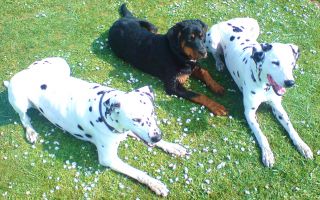
Above are just a few examples of Dominance and Aggression and if your dog is showing signs of any of the above or below, then please seek professional help. If only for your dogs sake, because I'm sure you would agree that it cant be nice living in a constant state of stress or fear and the way your dog may deal with it, could result in a person being injured, including your family.
| |
|
Aggression
Aggression in dogs is an important behavioural issue and should never be left to go away on it's own, because it wouldn't. In fact, it is the most common problem addressed by animal behaviourist around the world. Like any other behavioural problem, there is no 'quick cure' for aggression. However, if an owner is willing to get professional help and put in the time and effort required, aggression can usually be controlled. I really sympathize with every dog owner who struggle to know how to deal with an aggressive dog. In this article, we will look at dominance aggression. We will also go over some useful tips, and some resources for owners looking for help.
Dominance aggression - What is it?
Most dogs will look to their owner for direction. As puppies, they quickly learn to look to us to let them know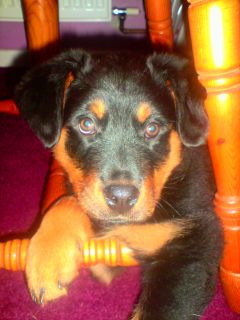 what we want them to do. Some dogs seem to have a harder time with this. A dominantly aggressive dog will consistently growl, snap, or bite to get what it wants. This is different to a dog that is assertive or pushy, but will obey a firm command. A dominantly aggressive dog is usually a dog that has found itself in a situation as a young dog and the owner has reacted to by feeling sorry for them. Like the poor dogs that find themselves in a rescue centre after being subjected to cruelty or pain by a mistreating owner and the new owners just want to make them feel safe. But because they feel sorry for the dog, they allow the dog to do anything it wants. A dominantly aggressive dog has an inappropriate response to normal situations, because when you allow a dog to do as it wishes, it will feel that it is the leader of the pack and will feel responsible for the safety of every member of the family and the house. This will lead to a lot of understandable stress and to deal with that stress, the dog will trying to control every situation, using the only reaction it was taught, that made it feel it had to do as it was asked, AGGRESSION. The longer this poor dog is left in this frame of mind the harder it would be for the dog to relax. All this dog needed was a person to give it direction and this would teach it to have control, this in turn would make it feel safe and stress free. what we want them to do. Some dogs seem to have a harder time with this. A dominantly aggressive dog will consistently growl, snap, or bite to get what it wants. This is different to a dog that is assertive or pushy, but will obey a firm command. A dominantly aggressive dog is usually a dog that has found itself in a situation as a young dog and the owner has reacted to by feeling sorry for them. Like the poor dogs that find themselves in a rescue centre after being subjected to cruelty or pain by a mistreating owner and the new owners just want to make them feel safe. But because they feel sorry for the dog, they allow the dog to do anything it wants. A dominantly aggressive dog has an inappropriate response to normal situations, because when you allow a dog to do as it wishes, it will feel that it is the leader of the pack and will feel responsible for the safety of every member of the family and the house. This will lead to a lot of understandable stress and to deal with that stress, the dog will trying to control every situation, using the only reaction it was taught, that made it feel it had to do as it was asked, AGGRESSION. The longer this poor dog is left in this frame of mind the harder it would be for the dog to relax. All this dog needed was a person to give it direction and this would teach it to have control, this in turn would make it feel safe and stress free.
Signs that your dog may be in need of more direction to help it feel safe are, when it becomes protective over 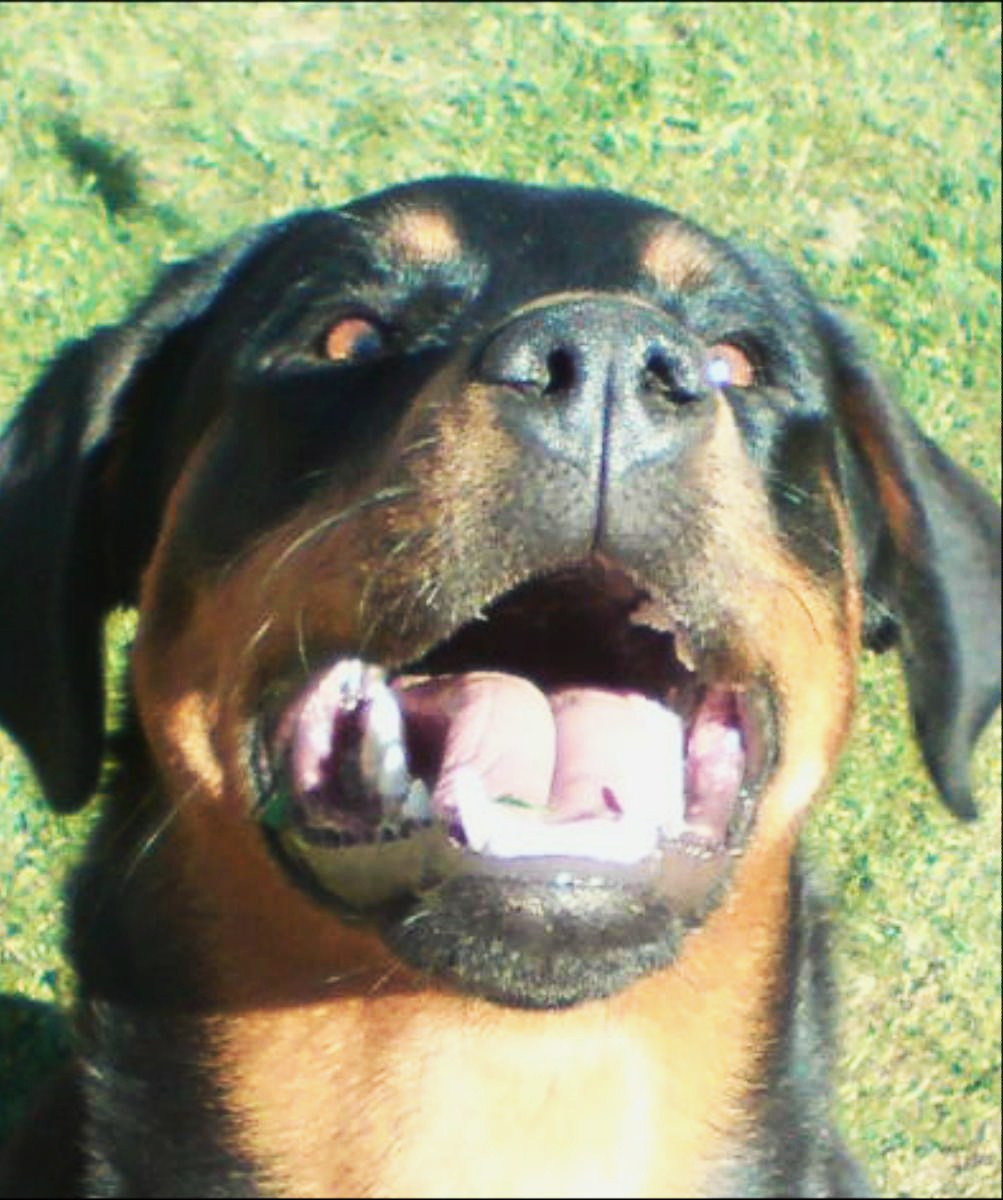 food or toys, or favourite sitting or sleeping areas (you should never allow your dog to jump up on a chair or your bed without you saying it can). Some may react if they are groomed (although they may calm down if no members of the family are present, this would be a good indication that your dog is not dealing well with stress), or if you stare at them, or if they are punished. In the beginning, the problem usually only occurs at certain times, for example, if you disturb your dog while she is eating or sleeping. Then it begins to occur more often, when you move to place the leash over her head, or tell her to get off of the sofa, etc. The problem is not the situation, but the issue of control (direction). Yelling, or physical correction such as yanking the dog backwards on the lead, "hanging" the dog by her collar or choke chain are not appropriate or effective form of discipline, and will only make matters worse. Unless done correctly by a professional, these attempts to "show the dog who is boss" may challenge the dog to be more aggressive, may even injure the dog, and without professional help, will do nothing to teach the dog a more appropriate behaviour in place of aggression. food or toys, or favourite sitting or sleeping areas (you should never allow your dog to jump up on a chair or your bed without you saying it can). Some may react if they are groomed (although they may calm down if no members of the family are present, this would be a good indication that your dog is not dealing well with stress), or if you stare at them, or if they are punished. In the beginning, the problem usually only occurs at certain times, for example, if you disturb your dog while she is eating or sleeping. Then it begins to occur more often, when you move to place the leash over her head, or tell her to get off of the sofa, etc. The problem is not the situation, but the issue of control (direction). Yelling, or physical correction such as yanking the dog backwards on the lead, "hanging" the dog by her collar or choke chain are not appropriate or effective form of discipline, and will only make matters worse. Unless done correctly by a professional, these attempts to "show the dog who is boss" may challenge the dog to be more aggressive, may even injure the dog, and without professional help, will do nothing to teach the dog a more appropriate behaviour in place of aggression.
Dominance aggression usually begins at around 18-24 months of age, when dogs become socially mature. Less commonly, it can occur in puppies as young as 4-5 months. While intact dogs may have a higher tendency towards dominance aggression, spaying or neutering alone will not solve the problem once it has started. Effective treatment may involve behaviour modification, combined with anti-anxiety medication, if needed.
What can I do about it?
As with any behavioural problem, some basic guidelines apply:
Set up an appointment with your veterinarian, to talk about the situation and have a thorough physical examination performed on your dog. Some rather common health problems can make an otherwise even-tempered dog aggressive. These include but are not limited to epilepsy, hypothyroidism, arthritis, hip dysplasia, and dental disease. Your veterinarian may recommend some testing such as a complete blood count, a chemistry panel, or a thyroid test.
-
If your dog is aggressive towards people, be realistic with yourself about the situation. If the way your puppy nips at you when she plays concerns you, do not just hope that she will outgrow it, get some help to stop the behaviour. If your adult dog growls when people walk past while she is eating, do not just assume that she will never take things a step further and bite someone. Problems like these are much easier to control early on, before you have a dog that you are afraid of, or that has bitten someone. Unless you have worked with dogs with behaviour problems, the best way to help your dog is to get assistance from a professional. Choose a trainer, veterinarian, or animal behaviourist with lots of experience in this area. Especially if your dog has already bitten someone, doing the wrong thing can make the situation worse, with serious results. It can be very helpful to have someone to talk to and ask questions of, especially if your dog does not seem to be responding in the way you expected. If you choose to work on the problem alone, you are taking a tremendous responsibility for the safety of the people and animals that dog comes into contact with.
-
 Increase the exercise. Dogs that get enough exercise are far less likely to have behavioural problems - of any kind - than dogs that are couch potatoes. How much exercise is enough? Most of us under-estimate the amount of exercise our dogs need: many trainers and behaviourists recommend 45-60 minutes of brisk exercise (until the dog is panting) twice a day! Running after the occasional squirrel in the back yard will not do it; the dog needs fairly continuous exercise to burn off all that energy he has built up while he has been waiting for you to come home. Play Frisbee with your dog; take her swimming, out in the woods to run, to a dog park, to doggie day-care. Take your dog jogging with you. Small breed dogs need plenty of exercise, too. They can go on long, brisk walks. They can play fetch. This is a game you can play outdoors or inside in a long hallway. Use several balls, so you can keep things moving. Ask the dog to sit before you throw the ball each time. Also keep in mind that many types of dogs were bred to do a job. Give them the mental stimulation they need with obedience or agility classes, field trials, learning new commands, etc. Increase the exercise. Dogs that get enough exercise are far less likely to have behavioural problems - of any kind - than dogs that are couch potatoes. How much exercise is enough? Most of us under-estimate the amount of exercise our dogs need: many trainers and behaviourists recommend 45-60 minutes of brisk exercise (until the dog is panting) twice a day! Running after the occasional squirrel in the back yard will not do it; the dog needs fairly continuous exercise to burn off all that energy he has built up while he has been waiting for you to come home. Play Frisbee with your dog; take her swimming, out in the woods to run, to a dog park, to doggie day-care. Take your dog jogging with you. Small breed dogs need plenty of exercise, too. They can go on long, brisk walks. They can play fetch. This is a game you can play outdoors or inside in a long hallway. Use several balls, so you can keep things moving. Ask the dog to sit before you throw the ball each time. Also keep in mind that many types of dogs were bred to do a job. Give them the mental stimulation they need with obedience or agility classes, field trials, learning new commands, etc.
If your dog is not used to this much exercise, you will need to increase it gradually. If your dog has any health problems, consult with your veterinarian about a safe exercise program. Obviously, if your dog is aggressive to other dogs, doggie day-care or a dog park may not be a good idea. And exercise alone will certainly not be the total answer for a dog's behaviour problems. However, increased exercise can really help to 'take the edge off' (think of how relaxed you feel after a good work-out).
Breaking the cycle of aggressive behaviour
Dogs are individuals, and what works best to correct aggressive behaviour is different in each case. Read and learn as much as you can. The following tips are often helpful for dogs with dominance aggression. Again, if things are at the point where there may be a danger to yourself or others, get professional help.
Avoid potentially dangerous situations until you have sought professional help. Do not do the things that cause an aggressive response in the dog, whether it is staring at the dog, hugging it, or disturbing it while it is sleeping. If the dog growls when her food dish is handled, give the dog something else to do while the dish is removed; fetching a ball, going for a walk. Do not use any treats or toys which may cause the dog to become possessive. If the dog starts to show any aggression, re-direct her attention. Take out the leash, or a favourite toy, and ask the dog to come to you and sit. You can also just walk away. Later, when the dog is calm and comes to you for attention, ask her to sit or lie down before you pet her. Keeping a long leash on the dog whenever she is inside can help you to move the dog when needed.
If the dog has already bitten someone, it may be best to have the dog wear a basket muzzle in the house, so that it can have social interaction with the family and not be isolated. Never leave a dog alone with a muzzle or leash on, indoors or out. Use a Gentle Leader or Halti head collar and make sure it is properly fitted. This is not a muzzle; it does keep the dog's mouth closed when gentle tension is applied, which has a calming, subduing effect. It also gives you much better control of the dog, since it works much like a horse's halter., offering direction and can also produce a calming signal from your dog (the turning of the head). Never leave a head collar on a dog in a crate, or if there is no adult present to supervise. Use a head collar outside for walks and inside during behaviour modification exercises; it greatly reduces the ability of the dog to pull you where he wants to go.
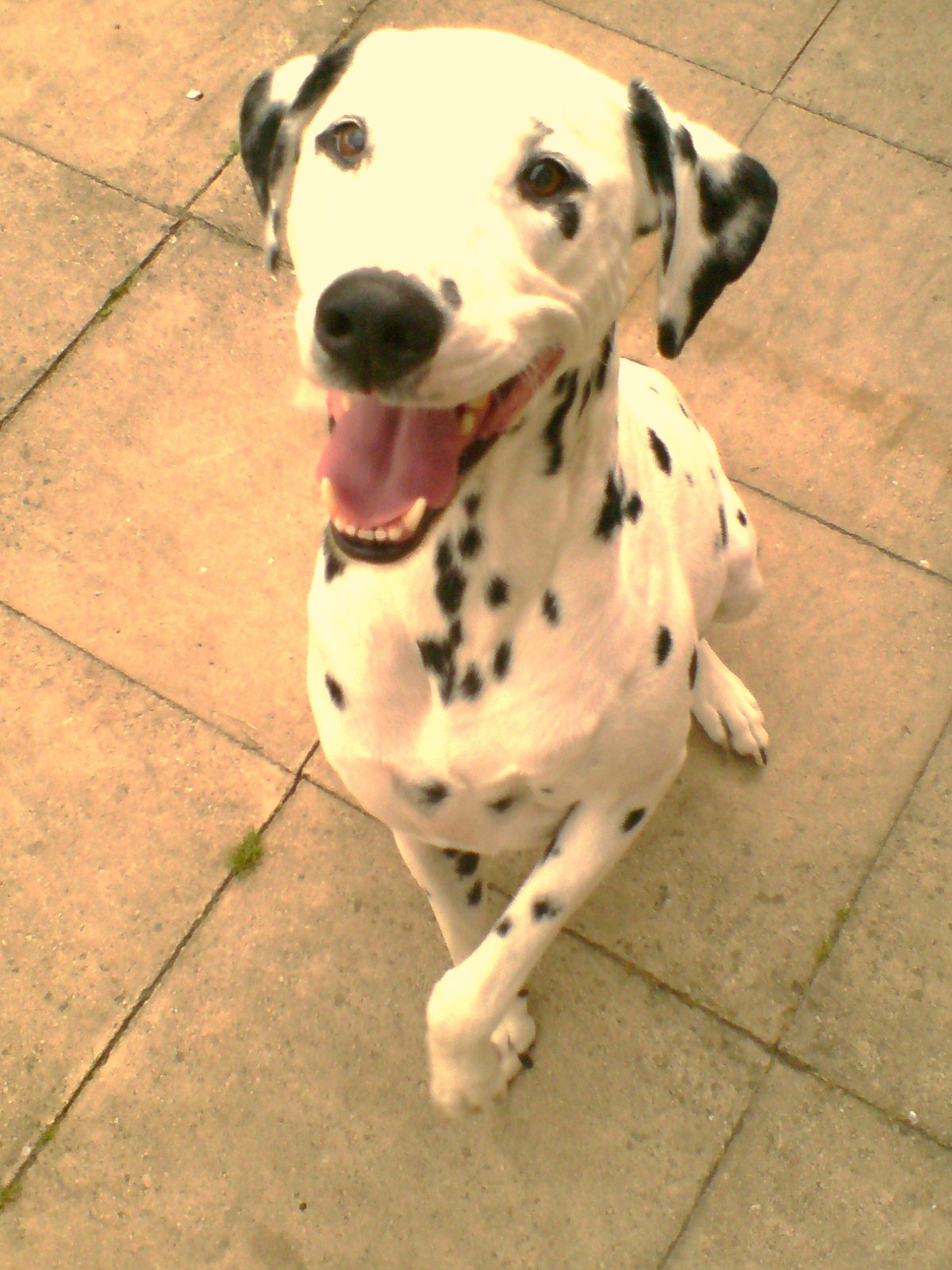 Teach your dog that it must earn everything, from you and anyone else, with appropriate, calm behaviour from now on, anything your dog wants means that it must first do something for you, such as sit or give a paw. You are in control, not the dog. Do not give the dog your attention on-demand. Ignore the dog if it whines for attention, or pushes at you with it's nose or paw. Wait until it stops making demands and is calm. Then ask it to sit, and the tail stops wagging, only then should you pet your dog. Make the dog sit or lie down and remain calm each time you give it treats, before you put the leash on, before going outside, before you throw the ball, etc. Several times a day, work with your dog on 'sit' and 'stay' commands, using small treats, and lots of praise. Teach your dog that it must earn everything, from you and anyone else, with appropriate, calm behaviour from now on, anything your dog wants means that it must first do something for you, such as sit or give a paw. You are in control, not the dog. Do not give the dog your attention on-demand. Ignore the dog if it whines for attention, or pushes at you with it's nose or paw. Wait until it stops making demands and is calm. Then ask it to sit, and the tail stops wagging, only then should you pet your dog. Make the dog sit or lie down and remain calm each time you give it treats, before you put the leash on, before going outside, before you throw the ball, etc. Several times a day, work with your dog on 'sit' and 'stay' commands, using small treats, and lots of praise.
Teach your dog that people have higher status than it does. Do not allow your dog to be on the couch or bed or in other places where humans sit or sleep unless you direct it to. Do not let your dog stand up and put it's front paws on your shoulders. Do not let your dog jump up on people at all. If the dog is going to jump up, ask her to sit or to lie down. When you come to a doorway, ask the dog to sit; then you go first and the dog follows. You should be the one to initiate playtime and decide when it will end. Avoid any games like 'tug-of-war' with an aggressive dog, as that may encourage your dog to be possessive about a toy. Practice having your dog come to you and 'drop' or 'give' whatever she is carrying. Any game with toys should always end with the dog giving the toy back to you, so that 'you win.' At mealtimes, prepare the dog's food, but do not give it right away. When the family has finished eating, make the dog sit and wait at the other end of the room (for aggressive dogs) to give you time to correct it if it moves towards the food. Until after you have place the dish down and walked away. Also please try to get the rest of the family, friends and even strangers to your dog, to take turns at making the dog sit and stay. so they will be able to put the dish down and walk away, before your dog gets up to go and eat it. This will help your dog to understand that people it doesn't know can be nice to it and even give it food.
For any of these exercises to help, they must be used consistently, and the whole family needs to be involved. Owners need to be prepared to work at it for the rest of the dog's life. Once a dog has learned to defer to people, there are additional exercises which can be used. These are designed to 'desensitize' the dog to the situation in which it has shown aggression (for example, at feeding time or during grooming). These exercises can be very effective if done correctly. Depending on the dog and the level of aggression, these situations can also be dangerous. This is where I would recommend owners work with an experienced professional, if they are not doing so already.
Sometimes in extreme cases, where the dog has been in an aggressive state of mind for a number of years. Medication may help in addition to the behaviour modification exercises. Commonly used medications include clomipramine (Clomicalm), amitriptyline (Elavil), and fluoxetine (Prozac). Patience is important; it can take weeks to months for certain drugs to become effective. These medications are powerful, and may interact with other drugs, so it is essential for your veterinarian to prescribe them and monitor their use.
That said, no dog that I have worked with would be recommended to use such, or any medication (unless for health reasons recommended by a vet) and the owners would be helped to understand the best way to psychologically help their dogs with behavioural problems. We have had no reason to recommend the use of any training method that offer dominance ( electric, pinch, spray, barking collars, stones in a tin etc...), unless it was something your dogs own mother would use to correct behavioural problems. We only recommend Half Check collars (sometimes called Half Choke, although used correctly should not choke) and a training lead. We help the owner to understand the dog language and how to naturally correct any behavioural problems and using these methods we are proud to say we have helped every dog that we have worked with. Although it is upto you as the owner to continue to use these methods correctly after our departure as to continue to help your dog to feel safe and offer you respect.
Again I would ask that if you have any concerns about the behaviour of your dog, then please seek professional advice as soon as you can. The longer your dog has the behavioural problem, the harder it would be to correct it.
To Find Dog Rescue Centres Near You Click Here
Can you give one of the many thousands of dogs in rescue home a full time loving home and help reduce the need for as many rescue centres
Return to Welcome page
**Calls from a mobile will be set at your network providers standard rate, but calling a landline or mobile without any cross network minutes may cost more.
(t) Travel expenses may need to be met, which may include overnight accommodation.
 |
|
Connors Legacy Home
Dog Rescue
enquiries@connorslegacy.co.uk - Terms and Conditions - About Us - Privacy Policy - Site Map -
Copyright ® 2010-2014 Connorslegacy.co.uk
4 Collingwood Road, Colchester, Essex, CO39AU |
News »
The Dangerous Dogs Act
Most dog owners believe that the Dangerous Dogs Act is only for the so called dangerous dogs, when infact it covers EVERY dog. If your dog is out of control in a public place, you have a dangerous dog and the owner/walker (or both) come under the laws of that act.
More...
If you need Help to understand your dog or if your dog has some behavioural issues you wish to seek help with. Connors Legacy Dog trainer, psychologist, counsellor and behaviourist
Based in North Essex is here to help. Click Here....
Can you give a rescue dog a loving home? They need your help to find a full time loving home, just click the link below on The Dog Rescue Pages

If you are in need of any professional help then please contact me via email
Enquiries@connorslegacy.co.uk
or for immediate help
please call Bill on
07989473131 |